In India, festivals are not a small part of the retail calendar. Diwali, Holi, Eid, Raksha Bandhan, Navratri, Christmas and regional celebrations such as Onam and Pongal each bring a spike in shopping, gifting and messaging. They also bring noise: everyone is sending the same “Festive Sale” message at the same time, and inboxes and phones overflow. Campaigns that win are planned weeks ahead, segmented sensibly and sent with respect for the occasion. This guide gives you a timeline, ideas by segment, channel advice, template and capacity checks, and a way to measure what the festival really added.
Why festival marketing needs its own plan
Seasonal demand is not just higher, it is different. Customers buy gifts, stock up, compare prices and decide faster. At the same time, sending capacity tightens, delivery partners get busy and operators and platforms see peak load. If you wait until a week before to start, you will find that your SMS templates are not registered, your lists are stale and your best creative slots are taken. A plan that starts early has another benefit: it lets you warm up your audience and sending reputation before the rush, as described in our warm-up guide. The cultural context matters too. A tone that works for a sale can sound wrong for a religious occasion, so involve someone who knows the festival.
A festival calendar to plan against
Dates shift every year, since many festivals follow lunar or regional calendars, so confirm them each year from a trusted calendar. The table below shows the typical shape, not fixed dates.
| Occasion | Typical period | Common shopping behaviour |
|---|---|---|
| Makar Sankranti, Pongal | January | Food, clothing, home goods |
| Republic Day sales | Late January | Electronics, fashion, deals |
| Holi | March | Colours, apparel, sweets, gifting |
| Eid | Varies by year | Fashion, gifting, food, travel |
| Raksha Bandhan | August | Gifts, sweets, jewellery, delivery deadlines |
| Independence Day sales | August | Deals across categories |
| Ganesh Chaturthi, Onam | Late August to September | Decor, food, apparel, regional offers |
| Navratri, Dussehra | September to October | Apparel, jewellery, footwear |
| Diwali, Dhanteras | October to November | Gold, electronics, home, gifting, the largest peak |
| Christmas and New Year | December | Gifting, travel, parties |
For a broader view of how festivals are marked across the country, the Wikipedia pages on the Diwali festival and the public holidays in India are a useful starting point, but your own sales history is a better guide to what matters for your customers.
A timeline that works
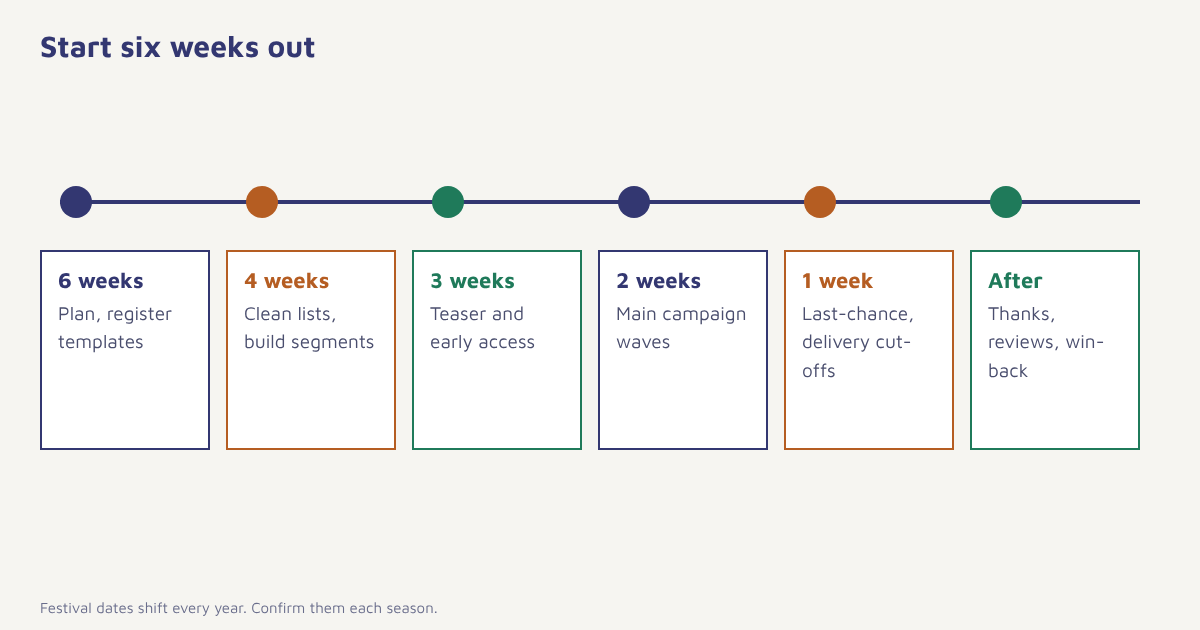
| When | What to do |
|---|---|
| 6 to 4 weeks before | Set goals and budget; review last year; register SMS and WhatsApp templates; check authentication and sending limits; clean lists |
| 4 to 3 weeks before | Plan offers and inventory; create segments; draft creative and copy; set up journeys and tests |
| 3 to 2 weeks before | Teaser to the most engaged customers; early access for loyalty members; collect wishlists |
| 2 weeks to the festival | Main campaign waves by segment; gifting guides; cart reminders; delivery cut-off notices |
| Final week | Last-chance reminders; stock alerts; confirm delivery dates; keep customer support ready |
| During | Send little and well; respect the day; focus on order updates |
| 1 week after | Thank you, review requests, second-purchase offer, win-back for those who did not buy |
Segment the festival, do not blast it
A festival is the worst time to send one message to everyone, because everyone else is doing exactly that. Split your audience and tune what each group gets. RFM segments make this easy.
| Segment | What they want | Message idea |
|---|---|---|
| Champions | Recognition and first access | Early access and a thank-you, no deep discount |
| Loyal and regular | Convenience and relevance | Personalised picks, delivery guarantees |
| Gifters | Ideas and deadlines | Gift guides by budget and recipient, delivery cut-offs |
| Bargain hunters | Price | Clear deals and countdowns |
| Lapsed customers | A reason to return | A festival win-back. See win-back campaigns |
| New subscribers | A friendly introduction | Welcome offer with a festive touch |
Regional preferences matter as well. A customer in Kerala and a customer in Gujarat celebrate different festivals at different times. If you have location data, use it in the segment builder to send the right festival to the right place, and avoid wishing people a festival they do not celebrate. Our personalization guide covers more on this.
Channel plan
| Channel | Festival role |
|---|---|
| Gift guides, early access, detailed offers. See email | |
| Personal offers and order updates to opted-in customers. See WhatsApp broadcasts | |
| SMS | Short time-limited alerts and delivery notices. See SMS templates |
| Push and in-app | App users: deals, wishlist and cart reminders. See push |
| Web | Banners, countdowns and recommendations |
Coordinate across channels so that one person does not receive the same offer four times in an hour. A frequency cap and a simple rule, such as email first, then WhatsApp for those who did not open, keep the experience pleasant. See omnichannel marketing for how to set this up, and use journeys for the cart and browse reminders that matter most during the season.
How to run it, step by step
- Review last year. Which festivals, products and channels produced results? Where did you run out of stock or time?
- Set the goal. Revenue, new customers, repeat orders or all three, with a target for each.
- Register templates early. SMS and WhatsApp templates need approval time. See DLT registration.
- Prepare the data. Clean lists, confirm consent and build segments.
- Build the journeys. Teaser, main waves, cart reminders and post-purchase, in the journey builder.
- Test everything. Send to test devices, check links, check variables and run a small A/B test.
- Launch in waves. Start with the most engaged, then widen, watching bounces and complaints.
- Monitor in real time. Watch delivery, inventory and support load during the peak.
- Debrief. Record what worked for next year.
Respect the occasion. Festivals have religious and family meaning. Avoid jokes, avoid sending at prayer times or late at night and keep greetings sincere. A warm, short message often does better than a loud one.
Festival campaigns in Flowfox
Flowfox has a ready festival pattern in the festival use case: segments for early access and gifters, a teaser and main wave in campaigns, cart and browse reminders as journeys and post-festival review requests. For retail, see the e-commerce solution, and for analysis after the season, analytics shows revenue by segment and channel. You can also use FoxAI to draft regional-language variants of your copy, which your team should review for tone and accuracy.
Measuring the festival
| Metric | Why it matters |
|---|---|
| Revenue by segment and channel | Where the lift came from |
| Incremental revenue vs a holdout | What the campaign added beyond normal demand |
| Discount cost vs margin | Whether the offers paid for themselves |
| New customers and their second purchase | Value beyond the peak |
| Unsubscribes and complaints | Whether you sent too much |
| Delivery and support metrics | Experience under load |
Festival demand can disguise weak campaigns, because sales rise whatever you do. Use a holdout group to see what the campaign added. A few weeks later, compare repeat purchase by cohort to see whether festival buyers stay or only came for the deal. Our guides to retention strategies and customer lifetime value show what to do next.
For wider reading, see the overview of seasonal marketing and of gift-giving traditions, which explains why gifting festivals drive such concentrated demand. Treat these as background and let your own customer data drive the plan: which festivals your buyers actually respond to, what they buy and how early they start.
Common mistakes
- Starting too late. Template approvals and list cleaning take time.
- One message for everyone. Segment by value, interest and region.
- Discounting champions. They would have bought anyway.
- Over-messaging. Peak weeks multiply unsubscribes.
- Forgetting delivery promises. Tell people the last date to order.
- No post-festival plan. The second order is where the value is.
Everyone is shouting during a festival. The brands people remember are the ones who were helpful.
Plan your festival season with segments and journeys. Start from a template, segment by value and region and measure the true lift.
Continue with abandoned cart recovery and A/B testing, and visit the blog.
Frequently asked questions
When should I start planning festival marketing campaigns?
About six weeks before the festival. This leaves time to register SMS and WhatsApp templates, clean lists, build segments and test journeys.
Which festivals matter most for marketing in India?
Diwali is usually the largest, followed by occasions such as Raksha Bandhan, Navratri, Eid, Holi, Christmas and regional festivals. Your own sales history shows which matter for your customers.
How do I stand out during a festival sale?
Segment your audience, personalise offers, start early with access for loyal customers, be clear about delivery dates and keep the tone warm instead of loud.
Should I send more messages during festivals?
Send more purposefully, not more often. Use frequency caps, coordinate channels and focus on relevant, time-sensitive messages like delivery cut-offs and cart reminders.
Which channels work best for festival campaigns?
A mix works best: email for gift guides, WhatsApp and SMS for timely personal alerts to opted-in customers, and push for app users, coordinated so people do not get duplicates.
How do I measure festival campaign success?
Track revenue by segment and channel, compare against a holdout group, check discount cost against margin and look at repeat purchases from new customers afterwards.
How do I handle regional festivals?
Use location and preference data to segment customers, and send the festivals they celebrate at the right time. Avoid assuming one festival for everyone.